
Welcome to Armchair Art Share. I’m Andrew, and today we’re stepping into the Roman High Empire — a period of extraordinary artistic ambition, architectural innovation, and imperial confidence.
From 96 to 192 CE — from Nerva to Marcus Aurelius — Rome wasn’t just ruling the Mediterranean world. It was building it.
Monumental Architecture and Engineering
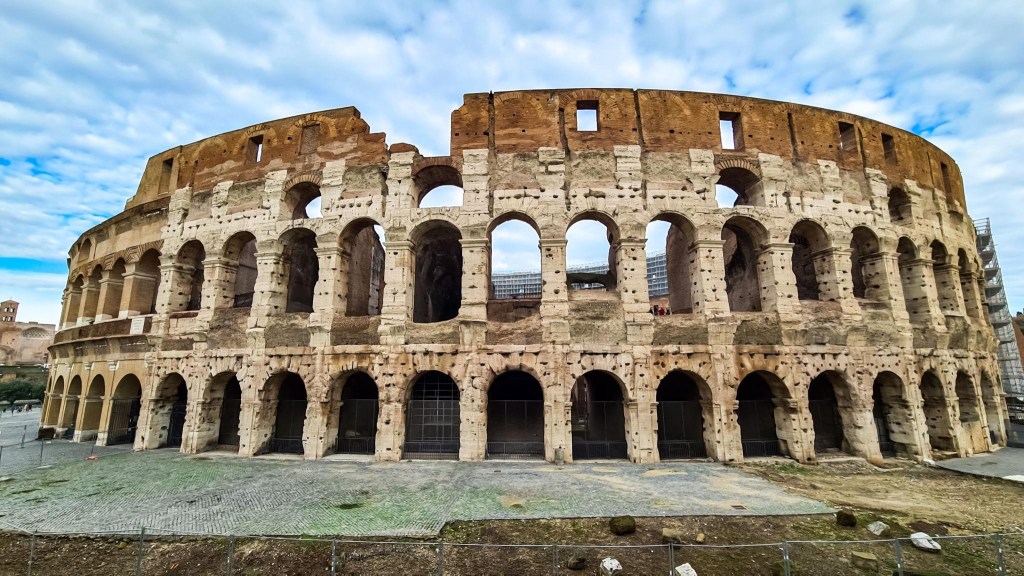
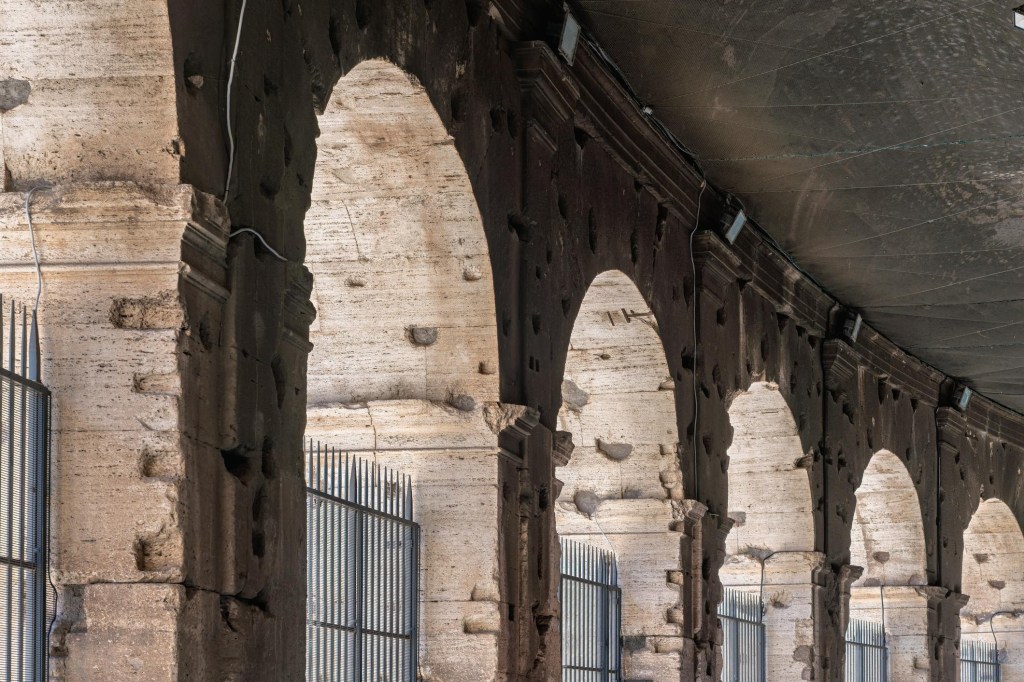
The Colosseum stands as one of the most iconic symbols of Roman engineering. With its stacked arcades, vaulting systems, and seating for over 50,000 spectators, it demonstrates Rome’s mastery of concrete and crowd design. Architecture here wasn’t just functional — it was political theater.
Under Emperor Hadrian, Roman engineering reached breathtaking heights with the Pantheon. Completed around 125 CE, its massive concrete dome — still the largest unreinforced concrete dome in the world — creates a perfectly proportioned interior space crowned by an open oculus. It’s a building that feels cosmic. Geometry becomes theology.
Imperial Urban Power
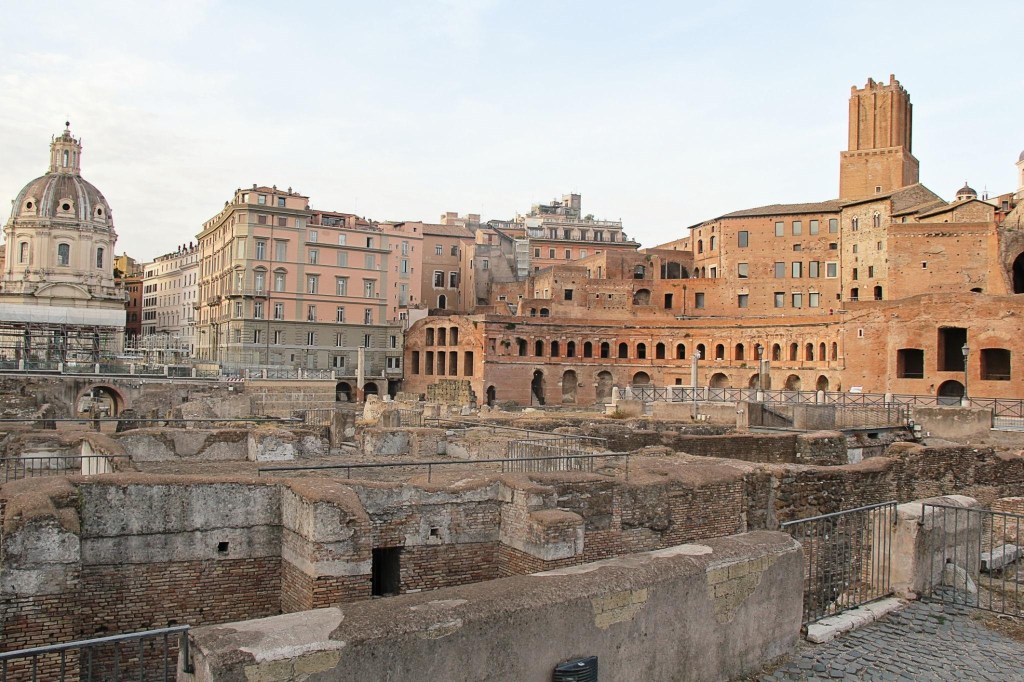
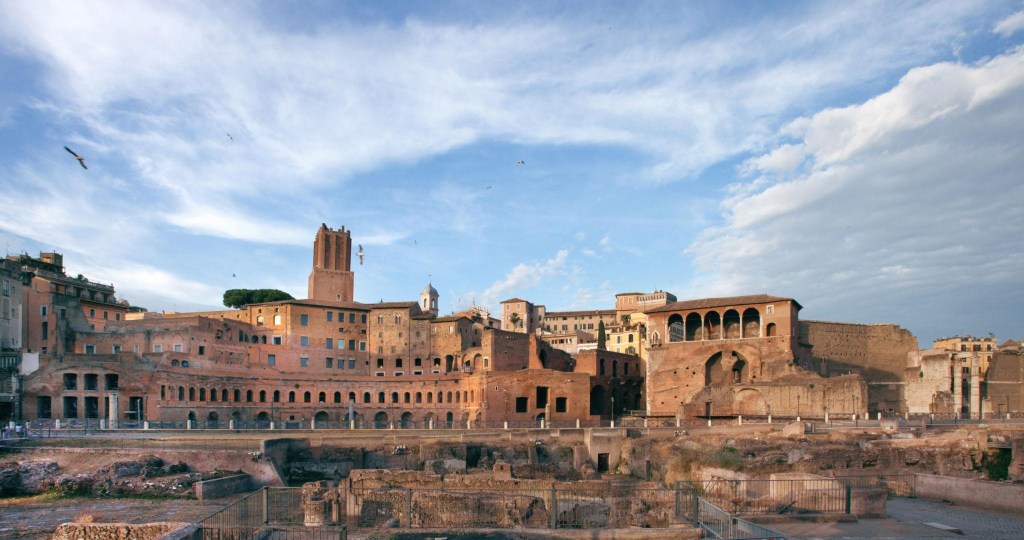
The Forum of Trajan was the largest of Rome’s imperial forums — a vast civic complex that included basilicas, markets, and monuments celebrating military victory. Adjacent to it, Trajan’s Market functioned as a multi-level commercial hub — sometimes called the world’s first shopping mall.
Rome didn’t just conquer territory. It organized space.
Narrative Sculpture and Imperial Propaganda
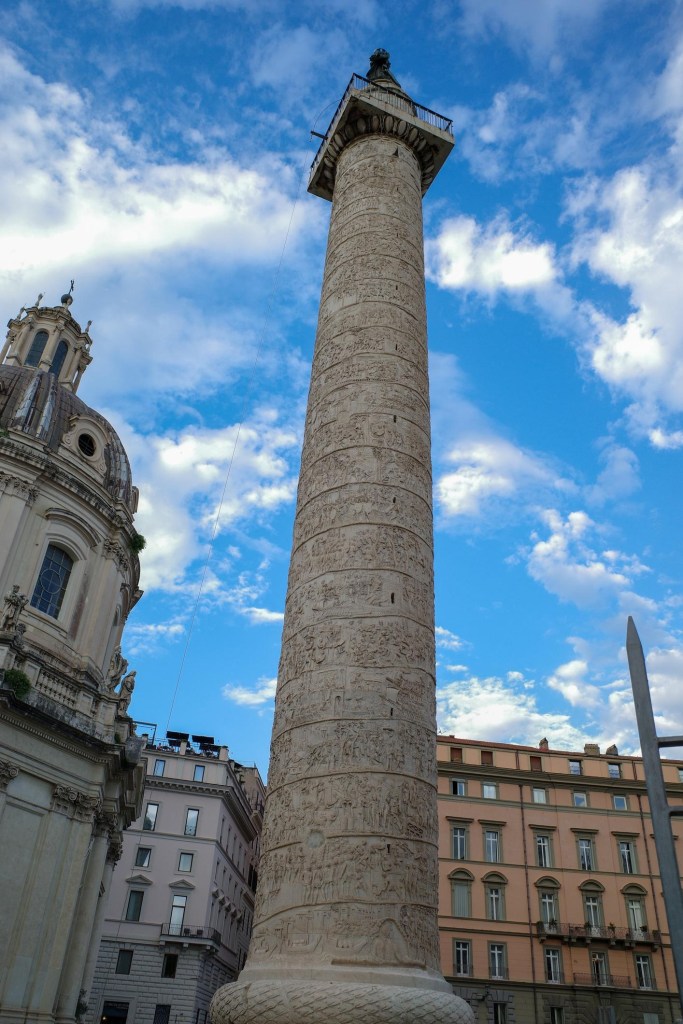
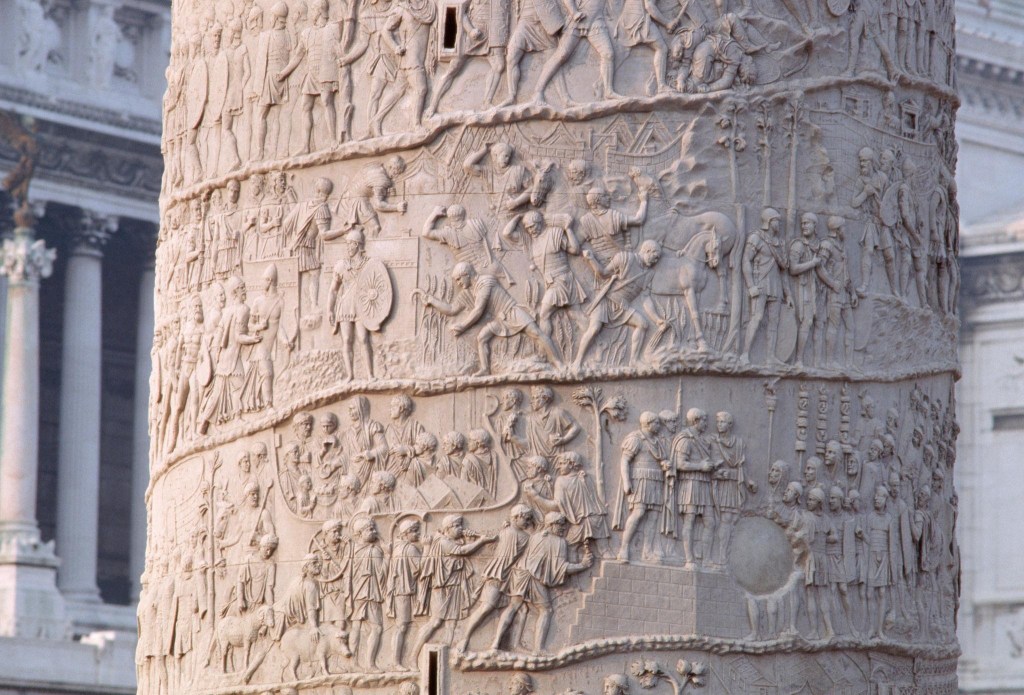
The Column of Trajan, completed in 113 CE, tells the story of Trajan’s military campaigns in Dacia through a continuous spiral relief. Over 2,500 figures wind upward in stone — a visual history book carved for eternity.
Nearly seventy years later, the Column of Marcus Aurelius echoed this format — but with more emotional intensity. The carving grows deeper. The figures more expressive. You can already sense the stylistic shifts that will define the Late Empire.
Imperial Portraiture
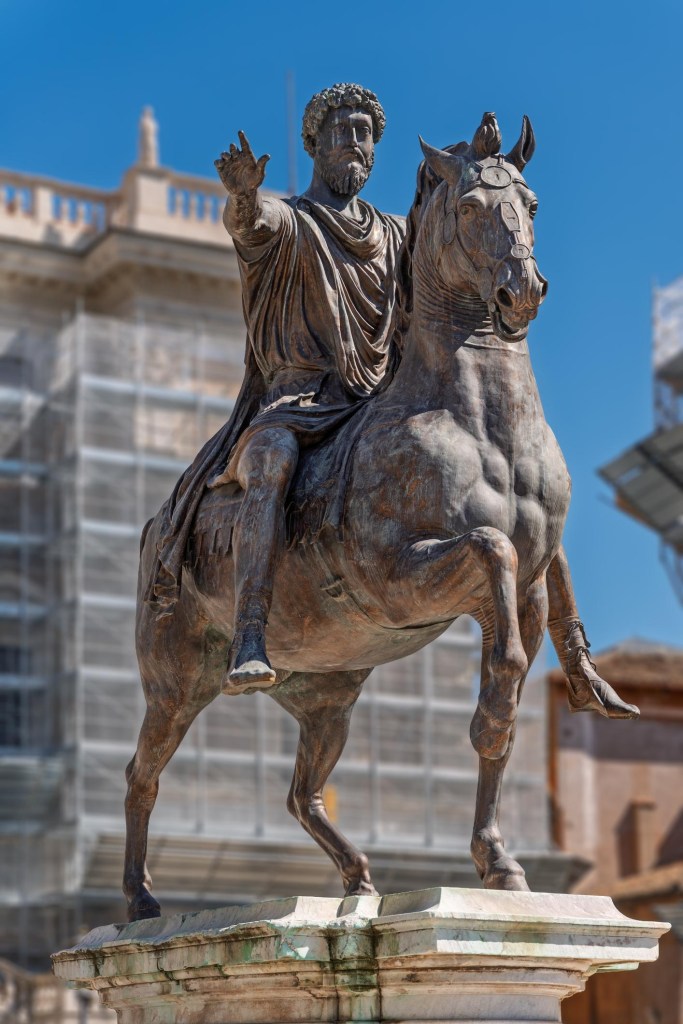
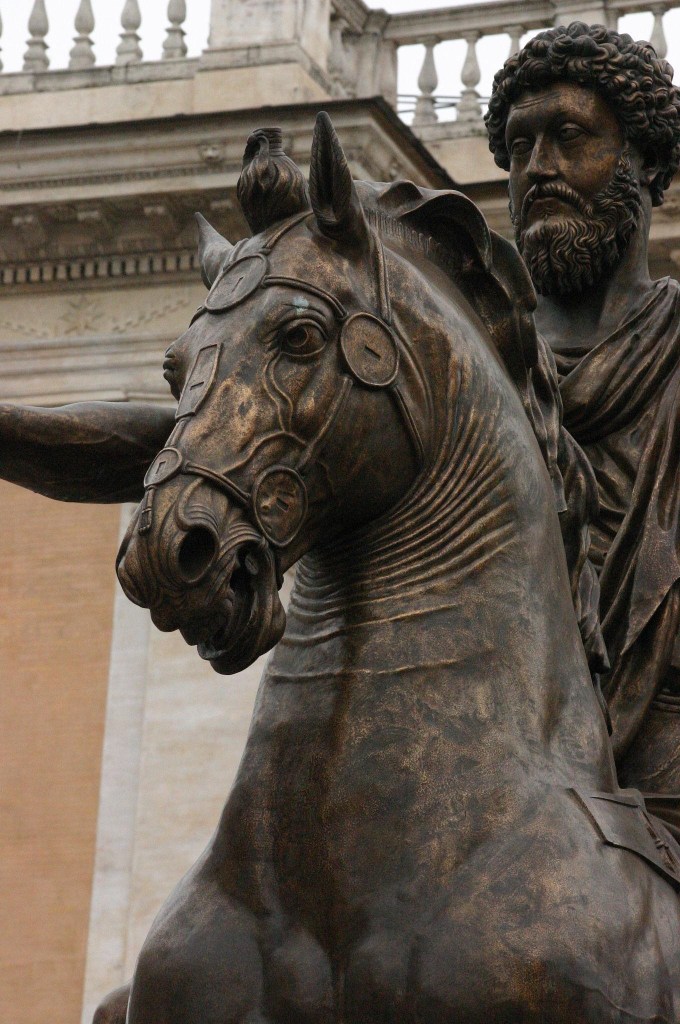
The bronze Equestrian Statue of Marcus Aurelius shows the emperor mounted, calm, and composed. His outstretched arm suggests clemency rather than aggression. Power is presented as controlled authority.
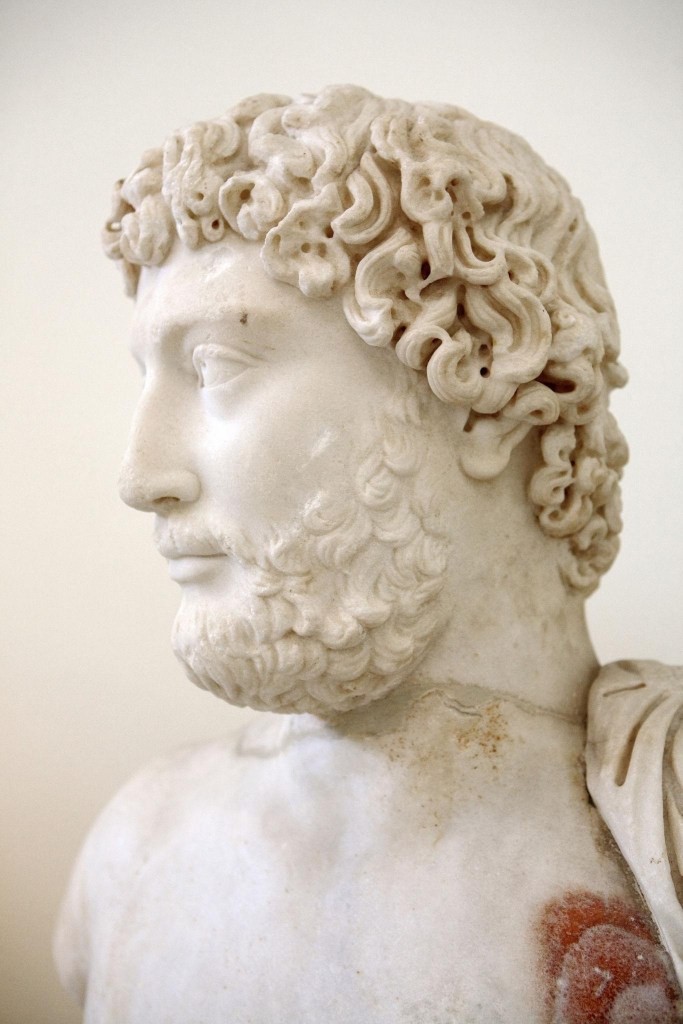
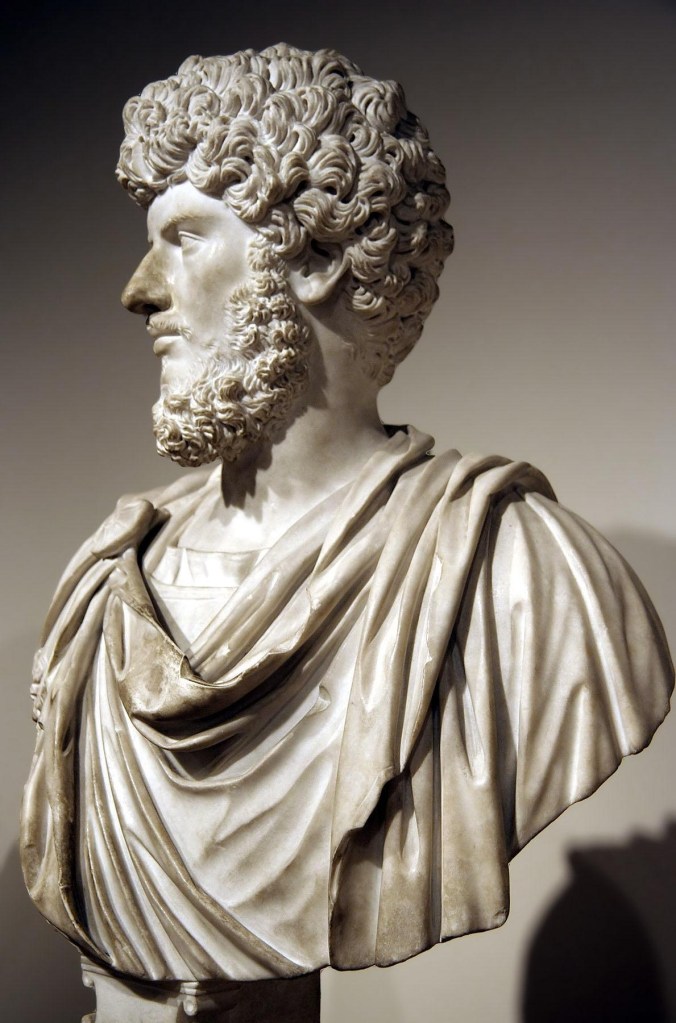
And in marble portraiture, emperors like Hadrian introduced a new visual identity. His beard — inspired by Greek philosophers — signaled intellectual refinement. Roman portraiture balanced realism with idealization, projecting strength while maintaining humanity.
Imperial Leisure and Experimentation
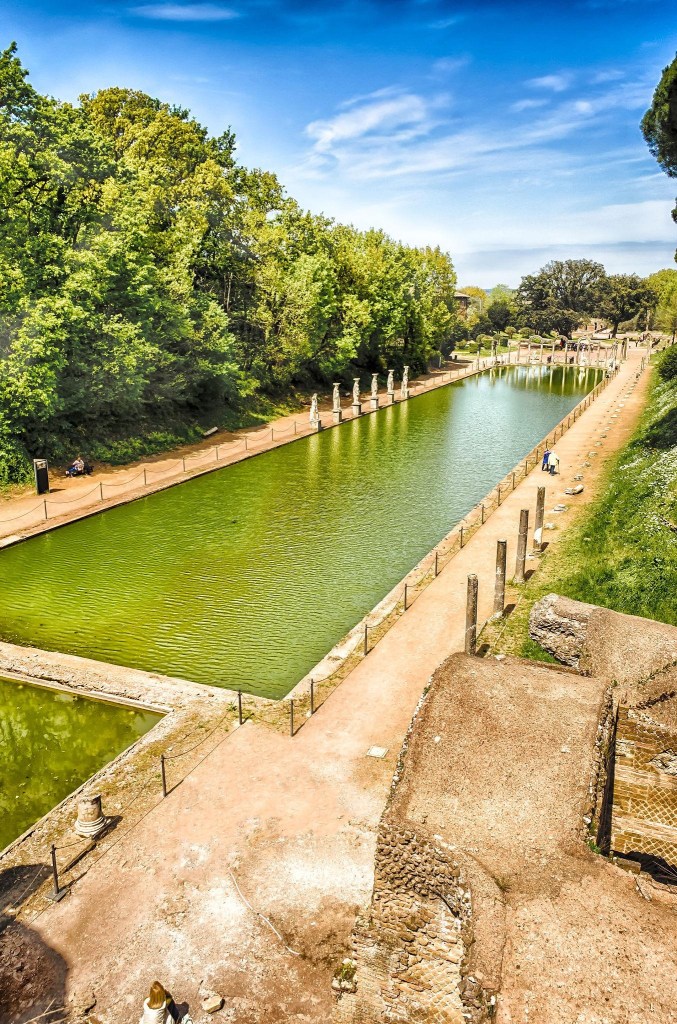
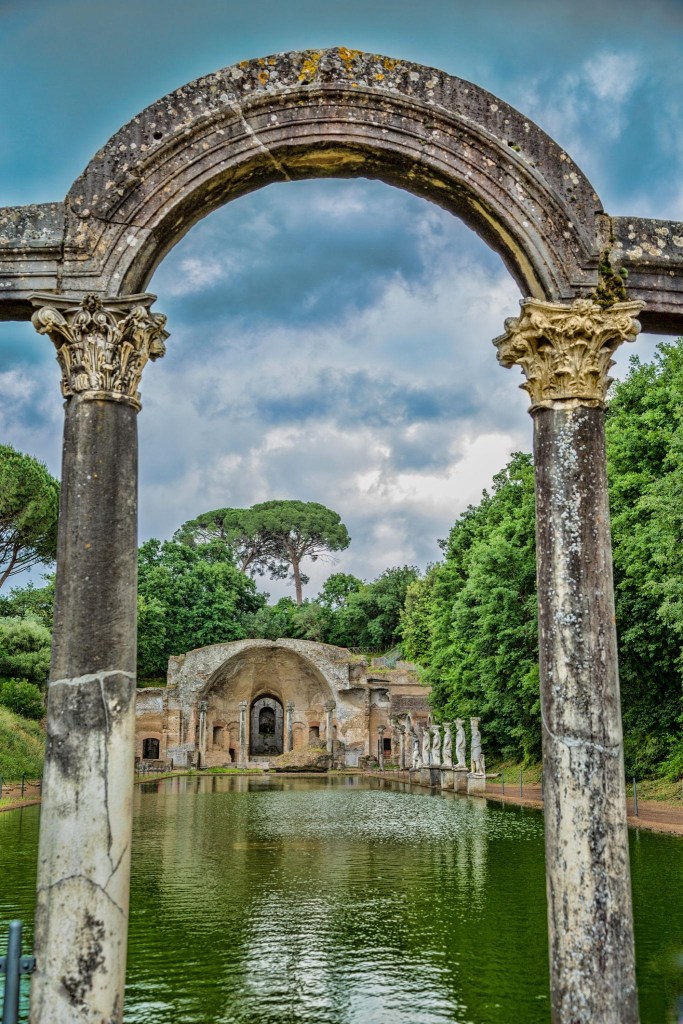
Outside Rome, the sprawling Hadrian’s Villa reveals an emperor fascinated by architectural experimentation. Domes, pools, curved colonnades — it was a microcosm of the empire itself, blending styles from across Roman territories.
The High Empire represents Rome at its architectural and artistic height. Monumentality, engineering innovation, narrative relief sculpture, and controlled realism in portraiture all converge into a visual language of power.
But beneath the grandeur, subtle stylistic shifts hint at change.
And that change will define the next chapter of Roman art.
 Armchair Art Share
Leave a comment