
By the Late Empire, Roman art:
- Becomes more symbolic and frontal
- Emphasizes hierarchy over realism
- Shows increasing abstraction
- Begins paving the way toward Late Antique and Early Christian art
If your High Empire episode is about confidence and balance, your Late Empire episode should feel heavier — more intense, more spiritual, more compressed.
Arch of Septimius Severus (203 CE)
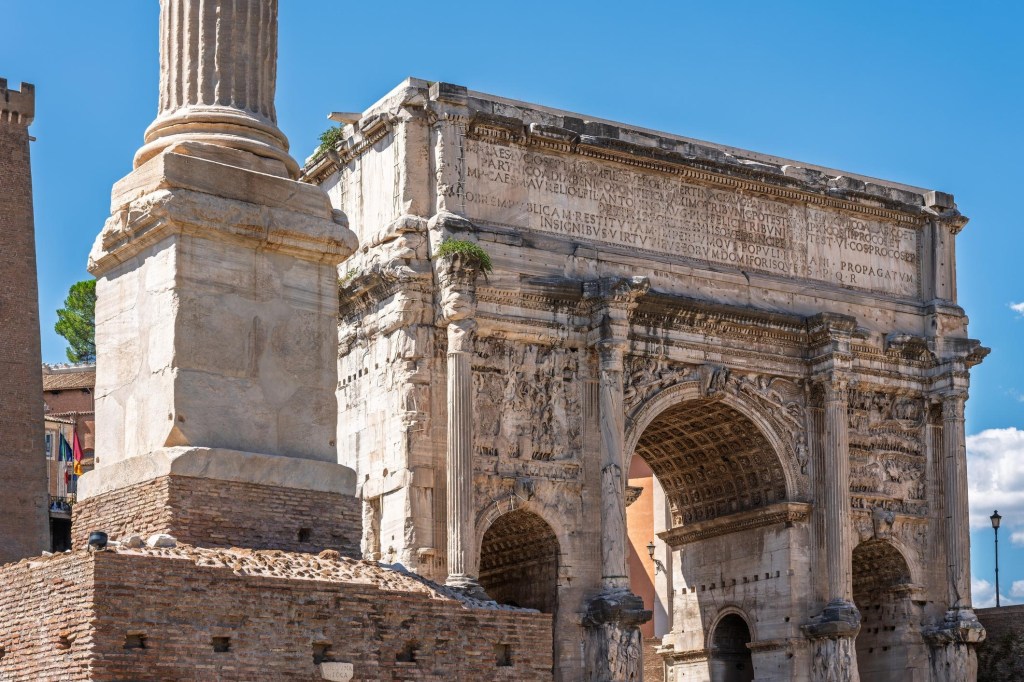
Located in the Roman Forum, this triumphal arch celebrates victories over the Parthians. The reliefs are more crowded and less illusionistic than earlier High Empire works — figures stack upward rather than recede naturally. Hierarchy and clarity matter more than realism.
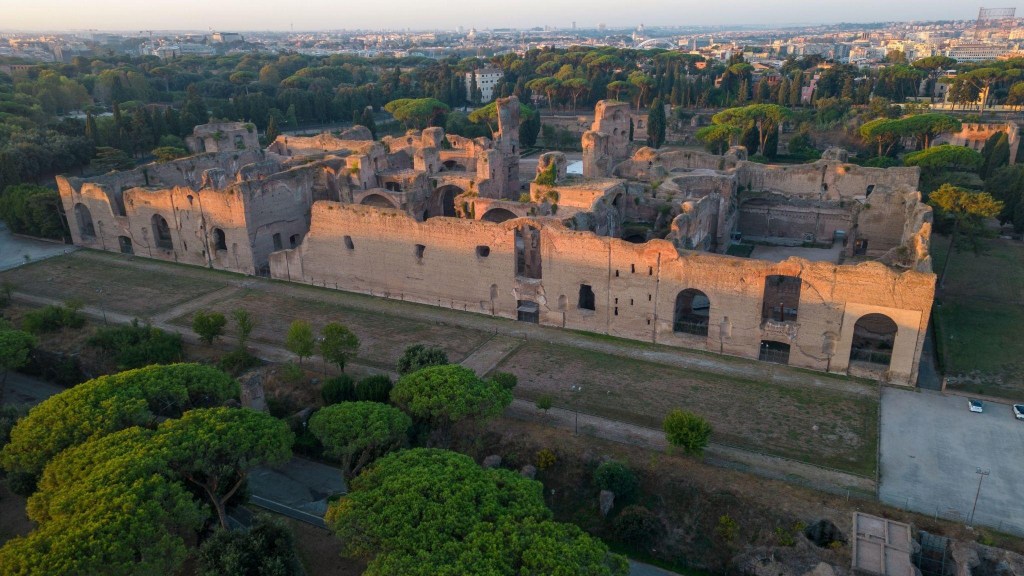
Baths of Caracalla (212–216 CE)
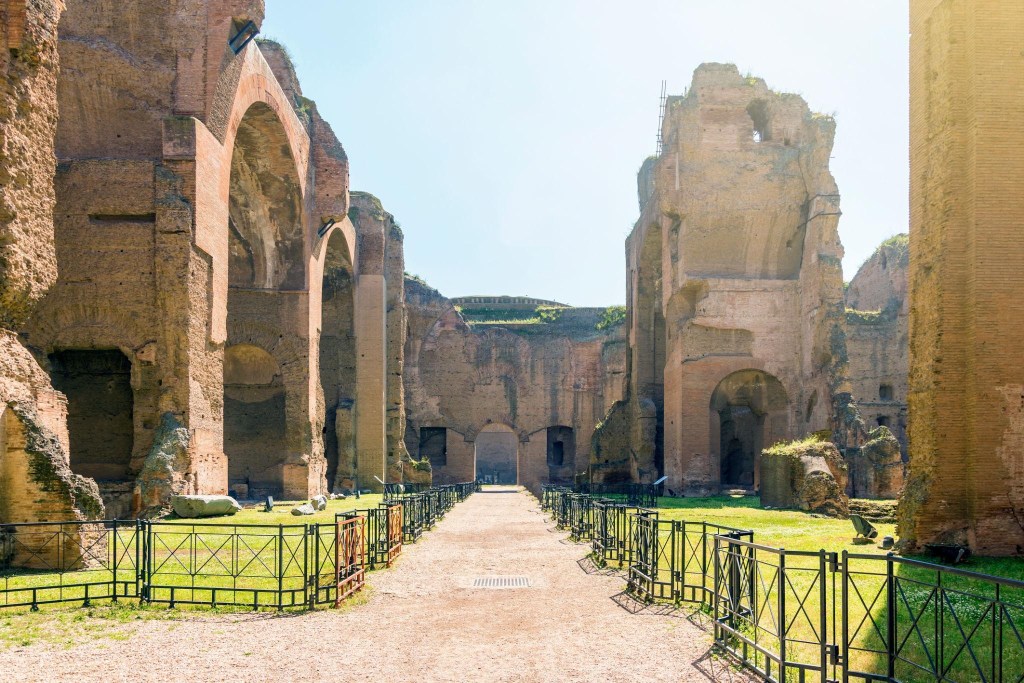
Massive, theatrical, and engineered on a colossal scale. These baths were social centers — libraries, gardens, exercise spaces. Even in instability, Rome built big.
Ludovisi Battle Sarcophagus (c. 250–260 CE)
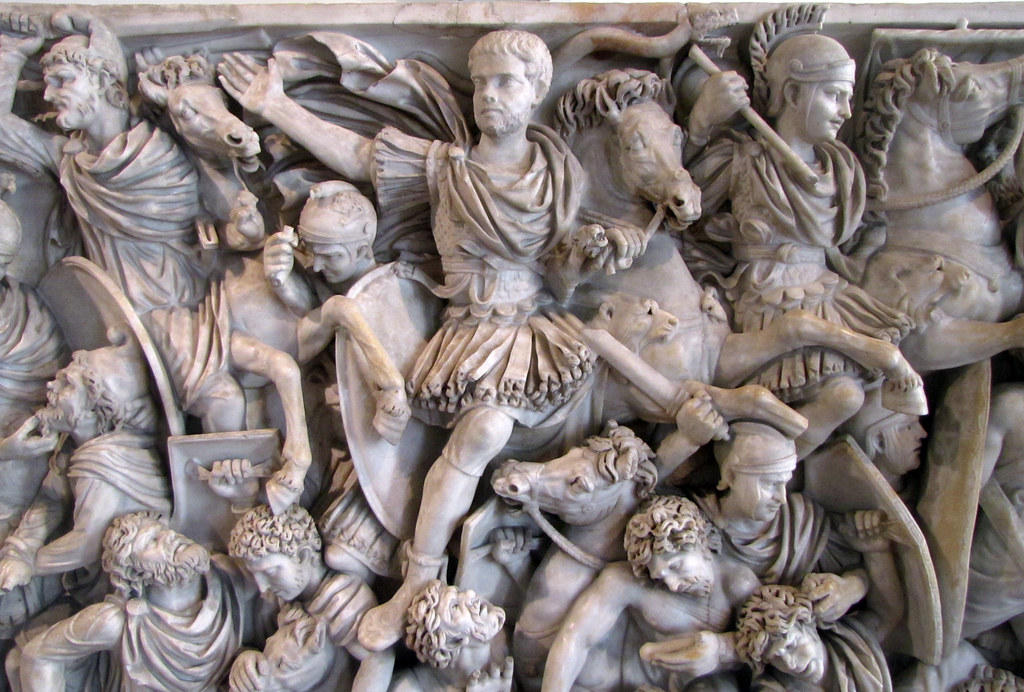
This sarcophagus explodes with chaotic energy. Figures are deeply drilled and tightly packed. There’s almost no background space — just emotional intensity. A dramatic departure from earlier classical restraint.
Portrait Bust of Caracalla (c. 212–217 CE)
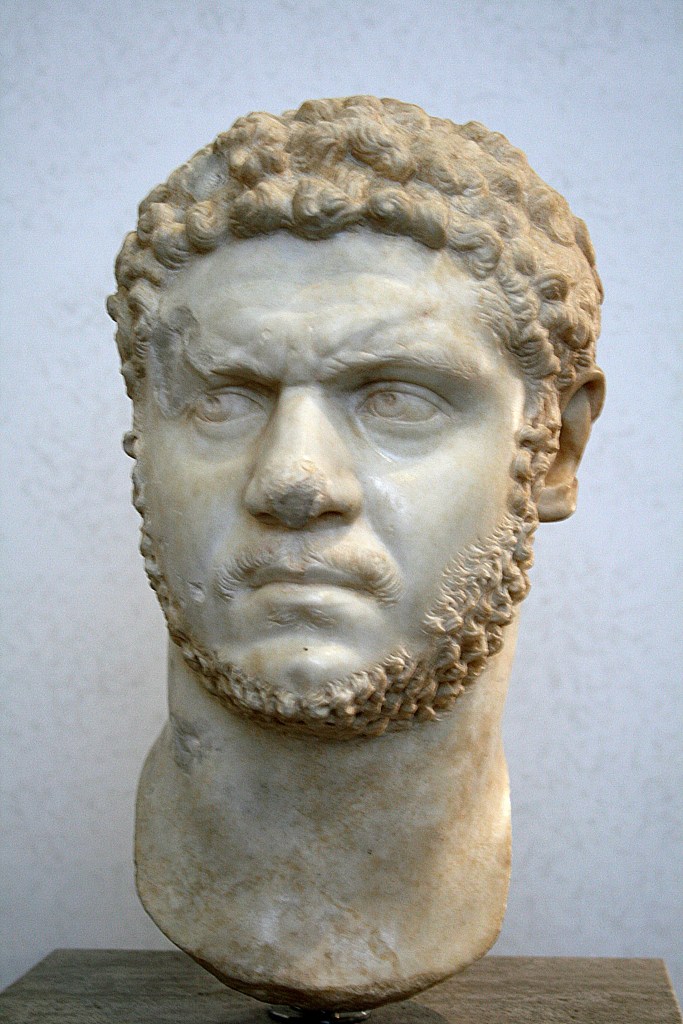
Famous for its psychological sharpness. Caracalla’s furrowed brow and turned head create a sense of paranoia and aggression. Late Imperial portraiture often emphasizes authority through severity.
Portrait of Philip the Arab (c. 244–249 CE)
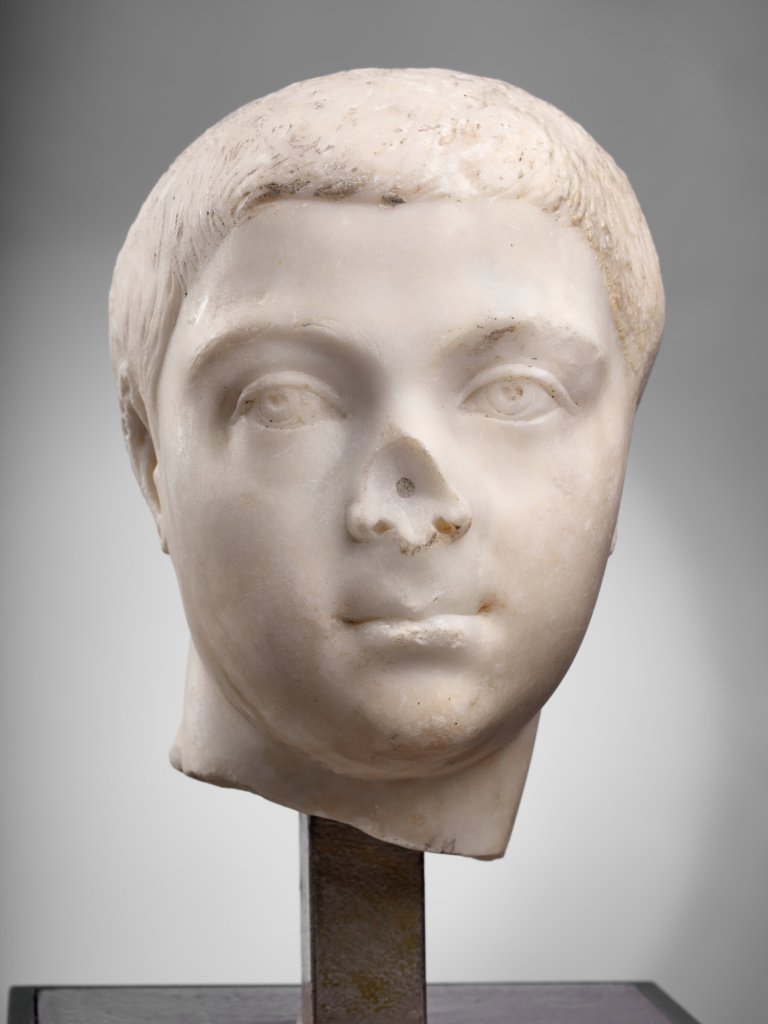
A fascinating example of increasing abstraction — simplified features, large eyes, spiritual intensity beginning to replace classical naturalism.
The Tetrarchs (c. 300 CE)
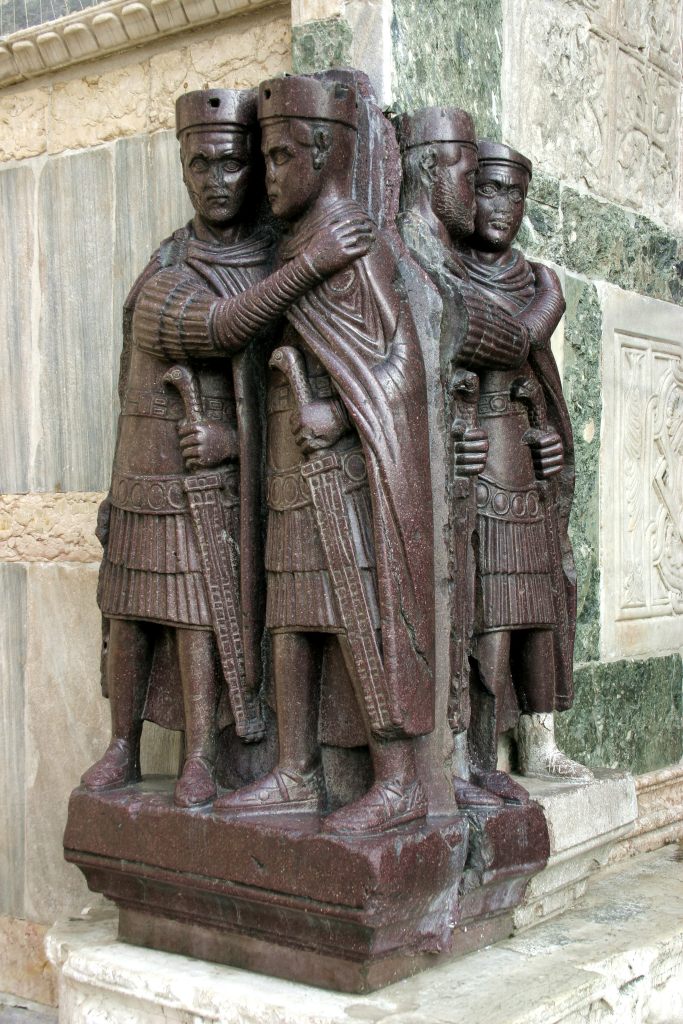
Four rulers carved from purple porphyry, now embedded in St. Mark’s Basilica in Venice. The figures are blocky, rigid, and nearly identical — unity and shared power over individuality. Symbolism fully overtakes naturalism here.
Arch of Galerius (c. 298–303 CE)
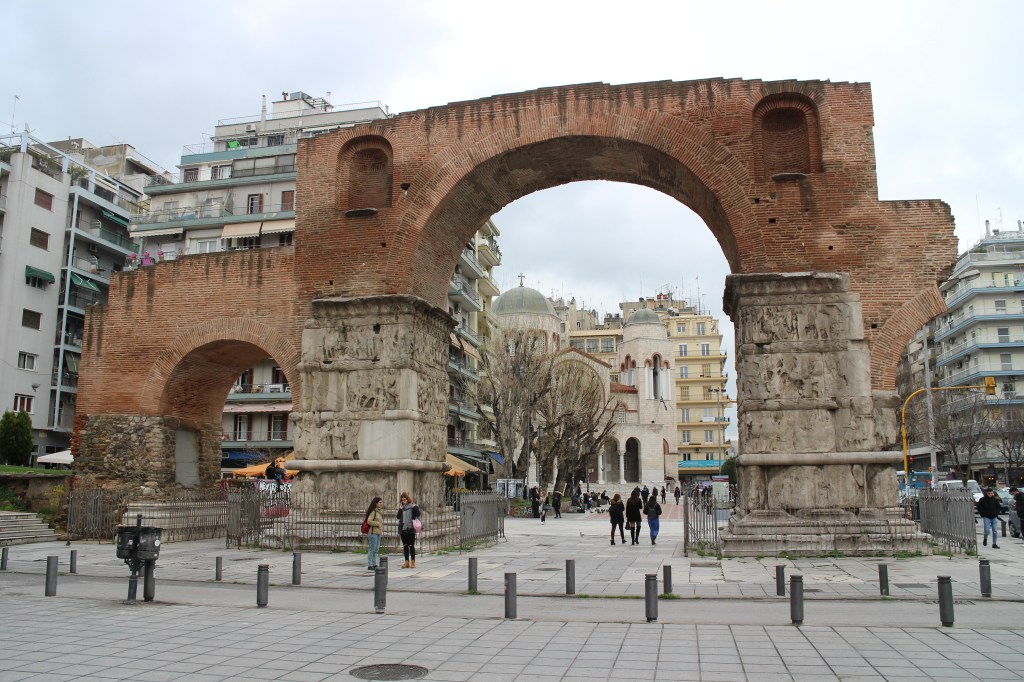
Located in Thessaloniki. Its reliefs emphasize frontal, hierarchical composition. Figures appear flatter and more symbolic than earlier Roman carvings.
Basilica of Maxentius and Constantine (306–312 CE)
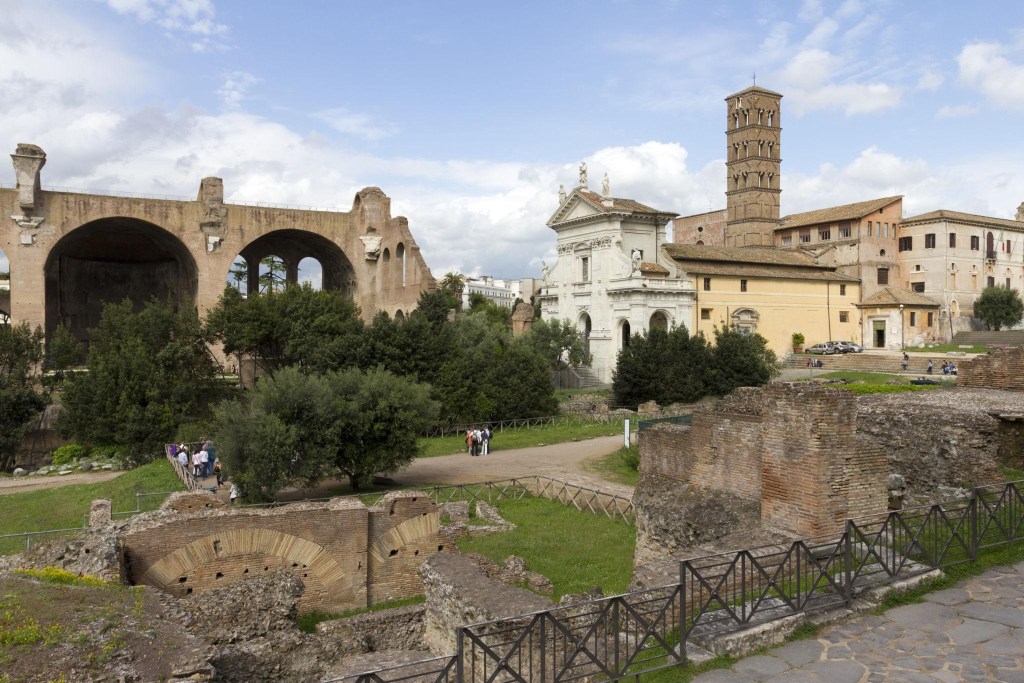
The largest building in the Roman Forum. Immense concrete vaulting shows Rome’s engineering genius — but the interior space feels more abstract and monumental than intimate.
Colossus of Constantine (c. 312–315 CE)
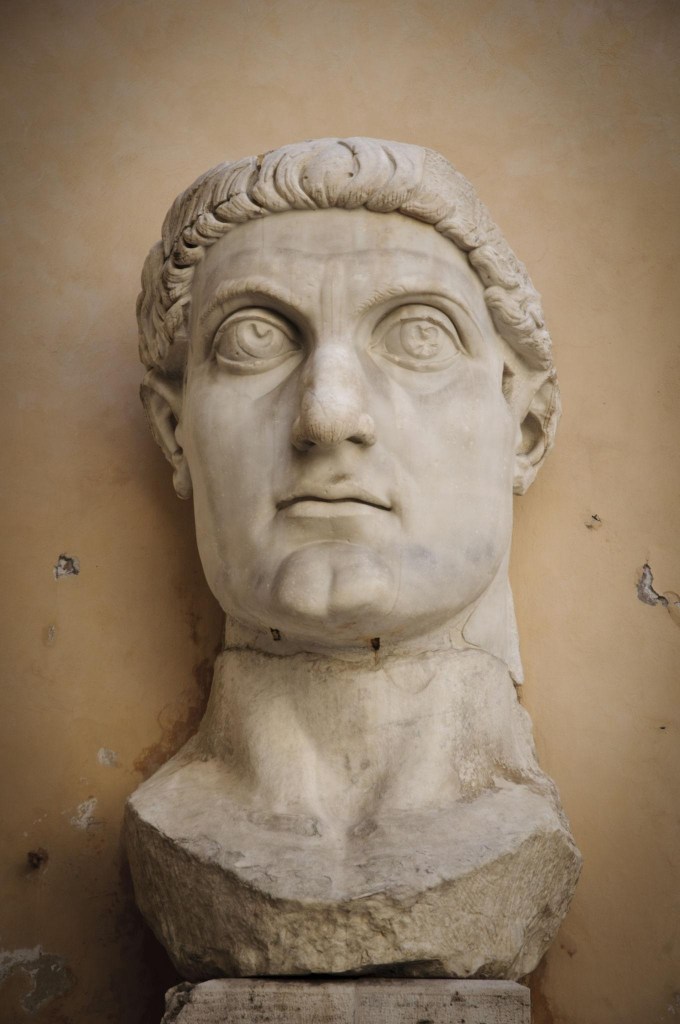
Only fragments survive — but that massive head says everything. Enormous eyes, simplified geometry, spiritual gaze. This is no longer a man — it’s imperial authority bordering on divine abstraction.
Arch of Constantine (315 CE)
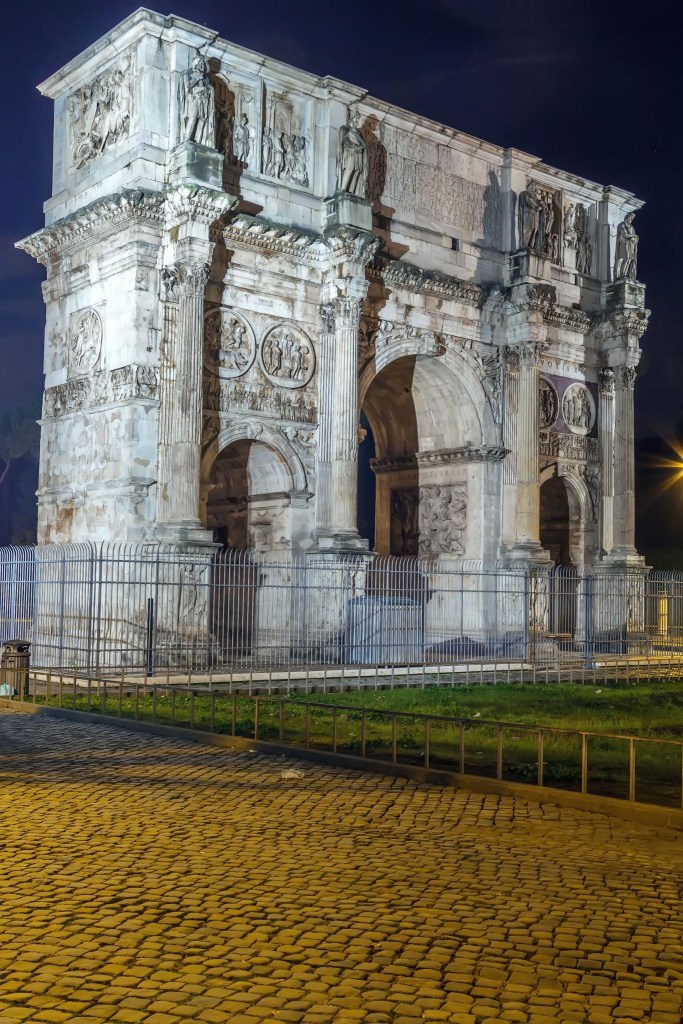
A fascinating mashup. It reuses earlier High Empire reliefs (from Trajan, Hadrian, Marcus Aurelius) alongside new Late Empire carvings. The contrast is striking — classical naturalism beside rigid, frontal Late Roman style.
 Armchair Art Share
Leave a comment