
Prehistoric Period
(c. 5000–2000 BCE)
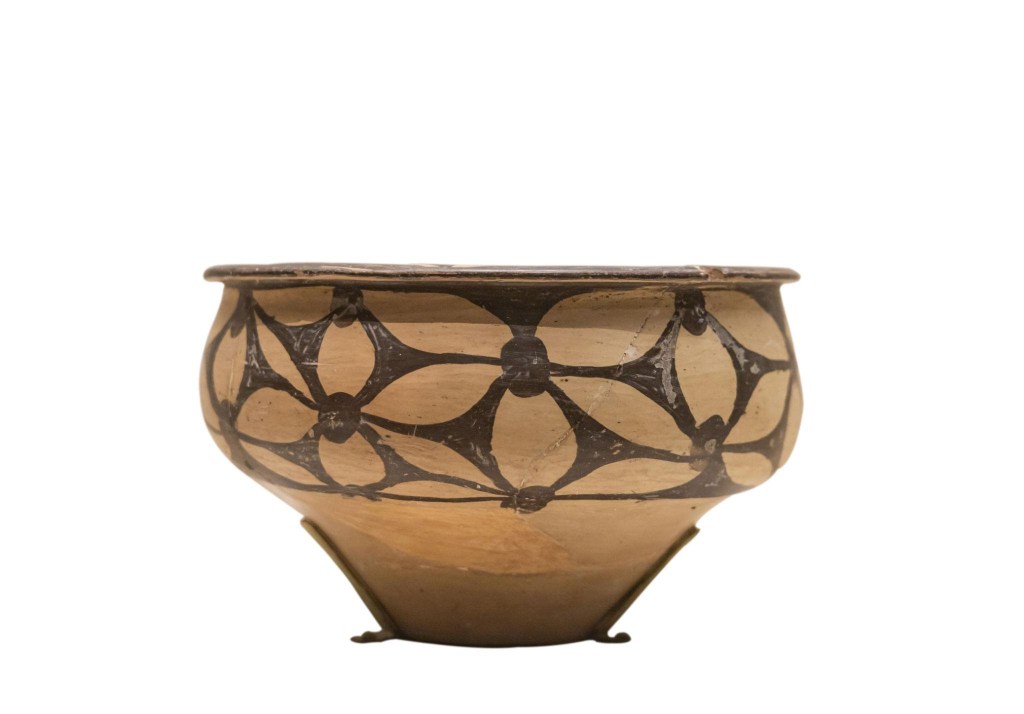
Long before written history, early Chinese cultures were already shaping clay, stone, and jade into works of profound beauty and meaning.
In the Yangshao and Longshan cultures, art emerged through painted pottery, jade carvings, and ritual objects.
Yangshao potters created vessels decorated with bold geometric patterns and stylized animal motifs, often used in daily life or burial.
Later, the Longshan culture introduced thinner, more refined black pottery—so delicate it was called “eggshell ware.”
But perhaps the most spiritual creations came from the Liangzhu culture, famous for its mysterious jade objects—the bi discs and cong tubes.
Carved with remarkable precision, they were placed in tombs and used in rituals.
The circular bi may have symbolized the heavens, while the square cong represented the earth—expressing a cosmology that would echo through Chinese art for millennia.
Even in these earliest centuries, we see what would define Chinese art forever: the harmony between nature, ritual, and the human spirit.
Shang Dynasty
(c. 1600–1046 BCE)
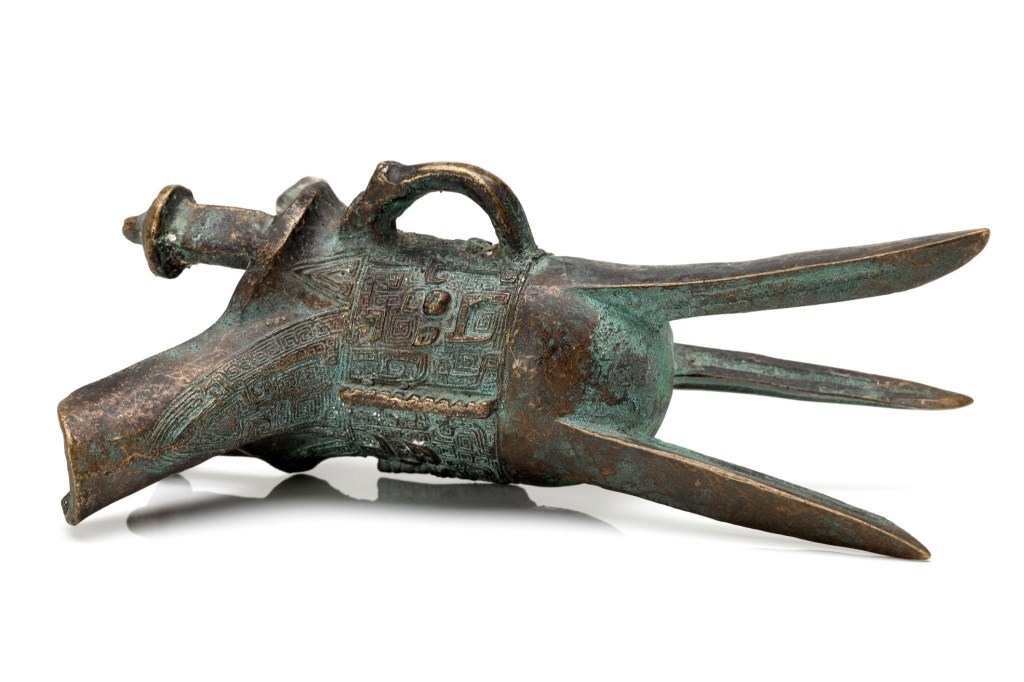
With the rise of the Shang Dynasty, China entered its first historical age—and art took on new purpose.
This was the era of bronze casting, used to create extraordinary ritual vessels for ancestor worship.
The Ding, a tripod cauldron, and the Guang, a wine vessel with fantastical animal forms, were cast using complex piece-mold techniques.
Their surfaces swirl with intricate taotie masks—stylized monster faces that may have symbolized power, mystery, or protection.
Each piece was more than a work of art; it was an object of communication with the divine.
Through bronze, the Shang gave form to their beliefs about ancestry, order, and the balance between the seen and unseen worlds.
Jade carving also continued, now refined for ceremonial use in elite burials, reinforcing the connection between art, ritual, and status.
Zhou Dynasty
(c. 1046–256 BCE)
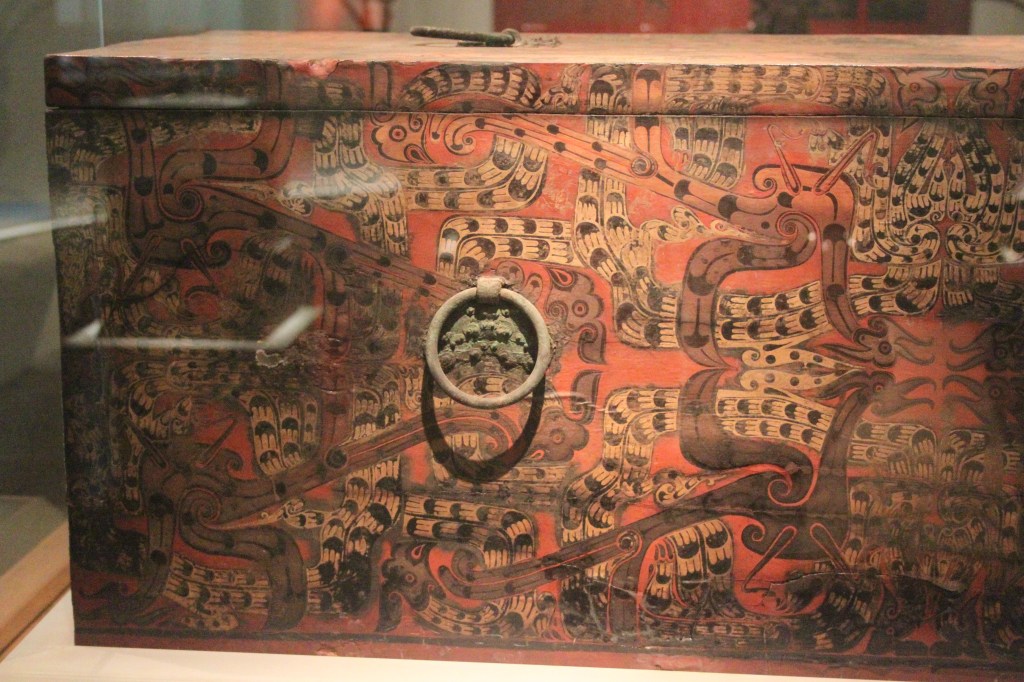
The Zhou Dynasty followed, lasting over 800 years—a time of innovation and shifting ideas.
During the Western Zhou, bronze vessels became even more monumental, often inscribed with dedications to ancestors or royal decrees.
One of the most famous examples, the Mao Gong Ding, bears one of the longest inscriptions from early China, celebrating loyalty and virtue.
In the later Eastern Zhou period, art became more diverse and expressive.
The Spring and Autumn and Warring States eras saw the rise of lacquerware, inlaid bronze, and ornate coffins from the state of Chu, decorated with vivid imagery of animals and mythic beings.
These objects show a culture fascinated by both the material world and the afterlife—rich, colorful, and imaginative.
Qin Dynasty
(221–206 BCE)
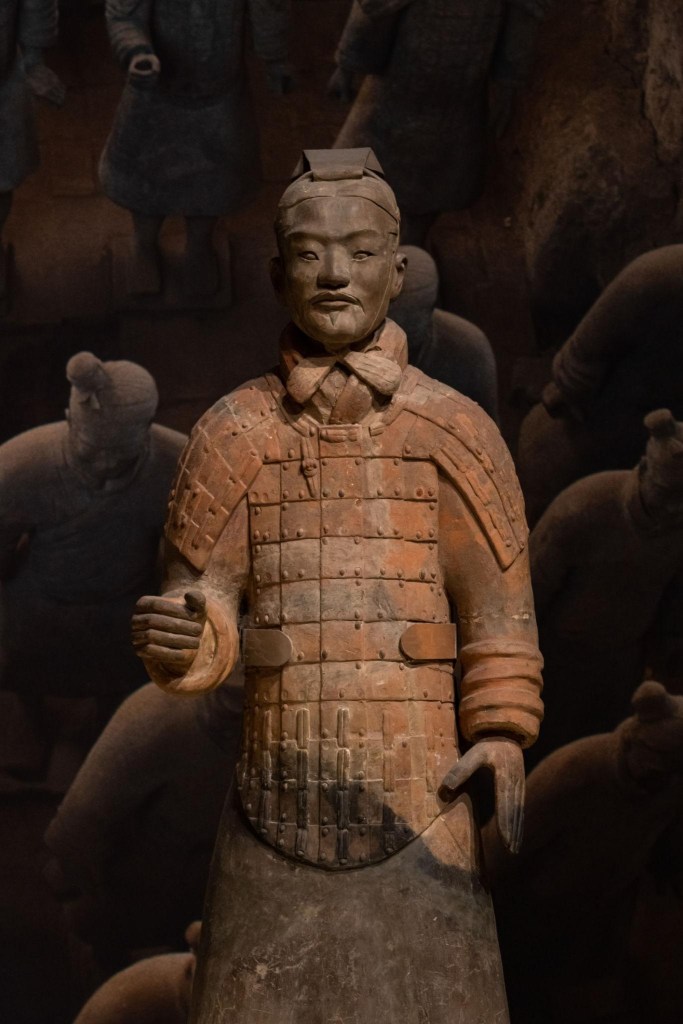
Then came the Qin Dynasty, short-lived but transformative.
In 221 BCE, Qin Shi Huang unified China for the first time—standardizing language, currency, measurement, and even artistic style.
His most famous artistic legacy lies beneath the earth at Xi’an: the Terracotta Army.
Thousands of life-sized clay soldiers—each with unique features—stand ready to guard the emperor in the afterlife.
Their precision, individuality, and sheer scale reflect a society capable of astonishing organization and creativity.
The Qin era marked the moment when Chinese art became both imperial and universal, blending craftsmanship with state power and spiritual purpose.
Han Dynasty
(206 BCE–220 CE)
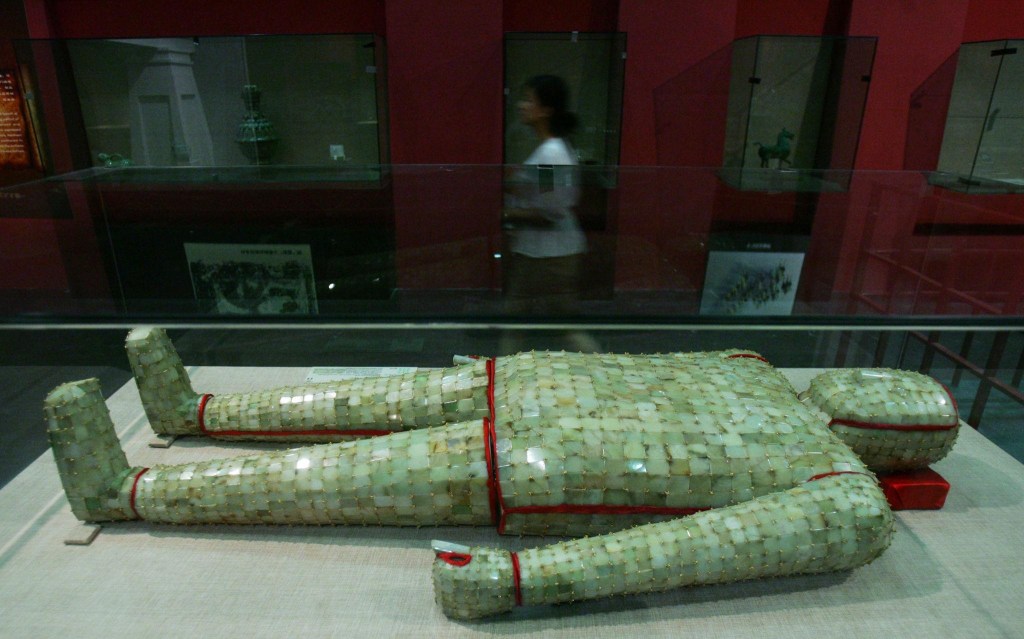
Under the Han Dynasty, China entered a new golden age of unity and creativity.
Art reflected both realism and spiritual belief, shaped by Confucianism, Daoism, and the early arrival of Buddhism.
One of the most remarkable works from this period is the Funeral Banner of Lady Dai, a painted silk masterpiece found in her tomb at Mawangdui. It illustrates her soul’s journey through heaven and earth, surrounded by dragons, celestial deities, and the rising sun. Every figure, color, and symbol expresses a profound cosmic vision—that life and the afterlife are part of one continuous order.
The Han also excelled in stone reliefs, tomb figurines, and exquisite jade burial suits, used to protect the bodies of nobles in death. Each jade piece was sewn together with gold or silver wire—a labor of devotion as much as art. Han artists believed beauty and ritual could bridge the human world and the eternal.
Six Dynasties Period
(220–589 CE)
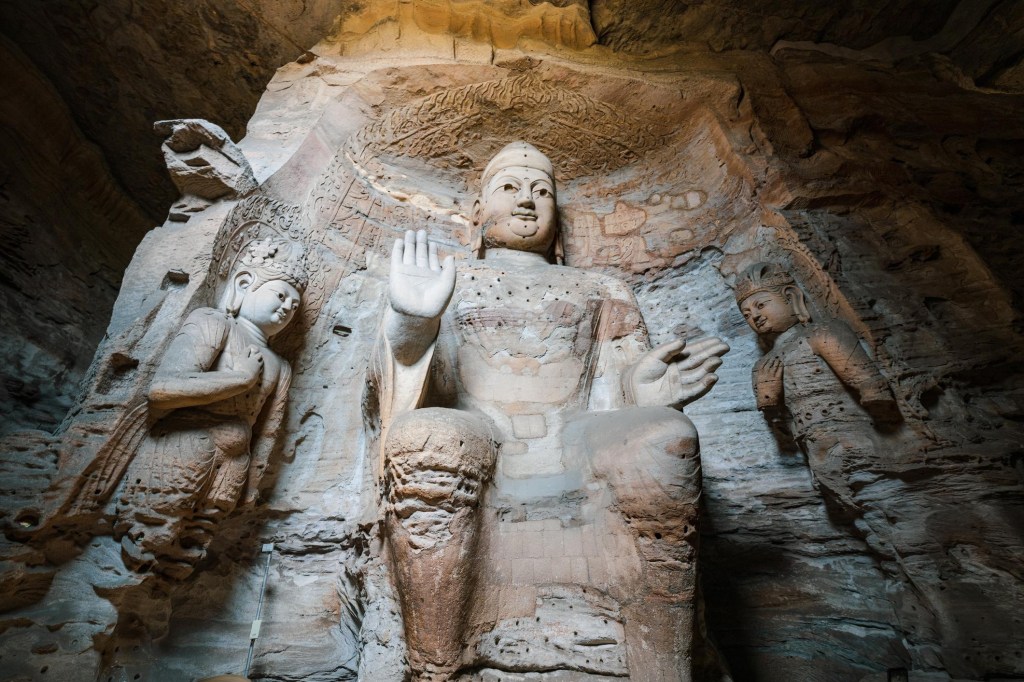
After the fall of the Han, China entered centuries of division known as the Six Dynasties Period—a time of political instability but incredible artistic growth.
Buddhism flourished, inspiring vast cave temples at Yungang and Longmen, filled with serene stone Buddhas carved directly into cliff faces. These monumental sculptures reflect both devotion and technical mastery, as Indian, Central Asian, and Chinese styles blended into something uniquely East Asian.
At the same time, painting and calligraphy rose to new heights. Artists like Gu Kaizhi, creator of The Admonitions of the Instructress to the Court Ladies, transformed painting into a form of moral storytelling—expressing inner character through elegant line and rhythm. It was said that a truly great artist could capture not just appearance, but spirit.
Sui and Tang Dynasties
(581–907 CE)
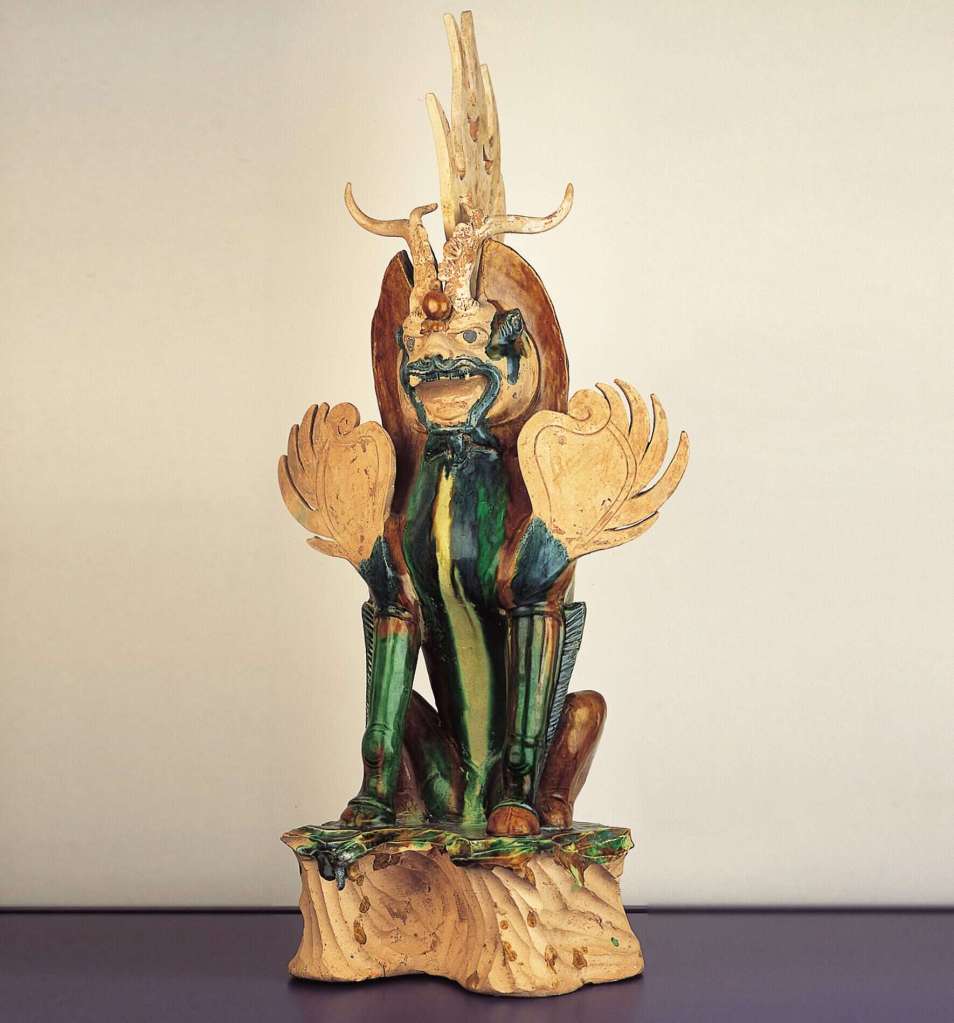
The reunification of China under the Sui and especially the Tang Dynasty brought another golden age—cosmopolitan, confident, and radiant with color.
Tang China opened its doors to the world through the Silk Road, and its art reflected this international exchange. At Longmen and Dunhuang, we see Buddhist sculpture and wall paintings influenced by India, Persia, and Central Asia—a global vision of faith carved and painted into stone.
Tang court art flourished as well. In Yan Liben’s Thirteen Emperors Scroll, history and portraiture combine to portray rulers of past dynasties with elegant brushwork and quiet dignity. This was art as both record and reflection—worldly in technique, spiritual in tone.
Song Dynasty
(960–1279 CE)
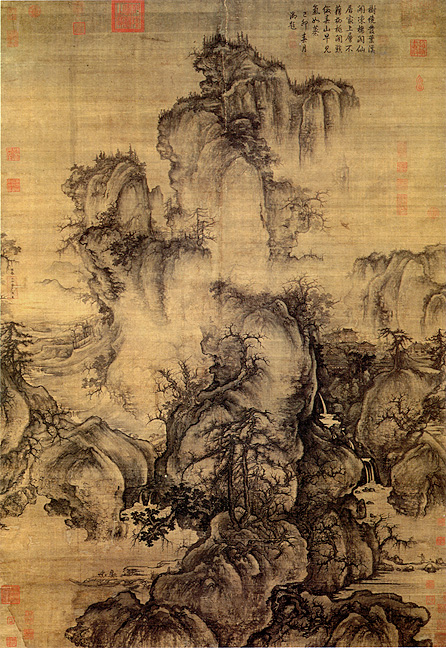
The Song Dynasty brought Chinese art to a new level of refinement and philosophy.
Landscape painting became the supreme form of artistic expression—where nature became a metaphor for the human spirit.
In the Northern Song, artists like Fan Kuan and Guo Xi created vast, towering mountains that reflected the cosmic order of the universe. Their works, such as Travelers Among Mountains and Streams and Early Spring, invite viewers to lose themselves in mist and depth—to see humanity as small, yet harmonious within nature’s grandeur.
Later, the Southern Song painters, including Ma Yuan and Xia Gui, turned inward, favoring lyrical, atmospheric scenes—a single branch, a quiet river, a distant moon. Their paintings feel like poetry in ink—intimate, meditative, and deeply philosophical.
Meanwhile, ceramic art flourished, especially the soft blue glazes of Ru ware, prized for their simplicity and serenity. For the Song artists, beauty lay not in excess, but in balance—art as a reflection of the Dao.
Yuan Dynasty
(1279–1368 CE)
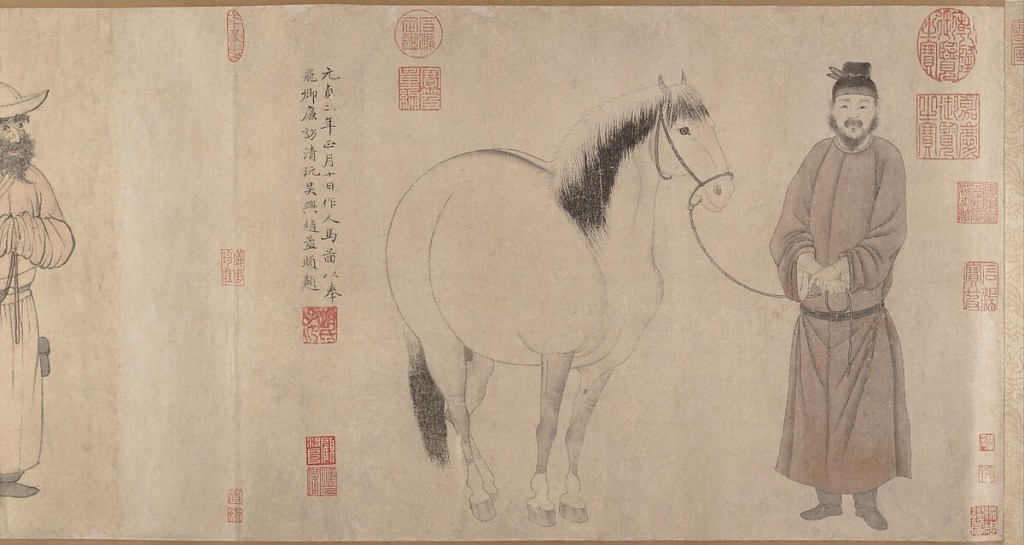
Under Mongol rule, China experienced dramatic political change—but also remarkable artistic renewal. During the Yuan Dynasty, many scholars turned away from official service and found freedom in art and poetry. These were the literati painters, who believed art was a form of personal cultivation, not professional display.
One of the greatest, Zhao Mengfu, revived classical calligraphy and ink painting, blending elegance with simplicity. His landscapes and horses echo ancient forms but carry a new sense of inner reflection.
Later masters like Huang Gongwang, in works such as Dwelling in the Fuchun Mountains, painted vast, misty landscapes where brushstrokes flow like thought itself. Yuan art isn’t about depicting the world—it’s about expressing the mind and spirit behind it.
Ming Dynasty
(1368–1644 CE)
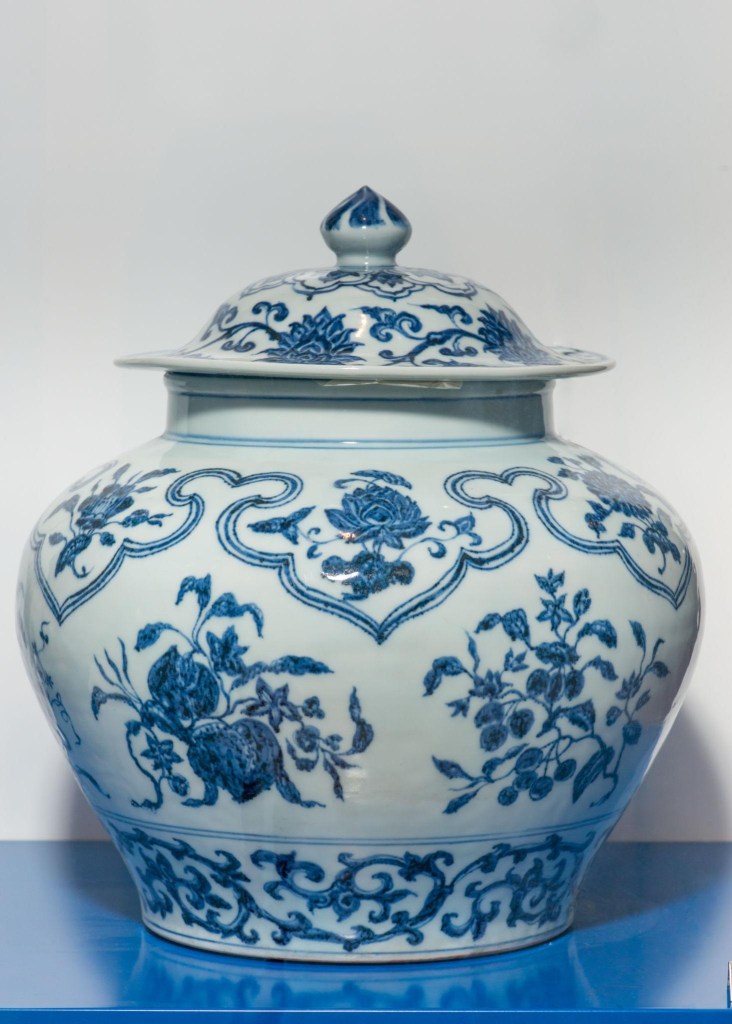
With the rise of the Ming Dynasty, Chinese art flourished under imperial stability and prosperity.
The Ming emperors sponsored grand projects and refined crafts—porcelain, architecture, and painting reached dazzling levels of perfection.
The Forbidden City in Beijing became the symbol of imperial order—its golden roofs and red walls arranged according to cosmic principles of balance and hierarchy. At Jingdezhen, artisans produced the iconic blue-and-white porcelain, painted with cobalt designs that traveled along the Silk Road and captivated collectors worldwide.
In painting, two great schools emerged: The Zhe School, made up of professional painters serving the court, and the Wu School, composed of scholar-amateurs seeking poetic self-expression. Artists like Shen Zhou painted serene landscapes infused with poetry and personal reflection, blending art, literature, and philosophy into a single act of creativity.
Qing Dynasty
(1644–1911 CE)
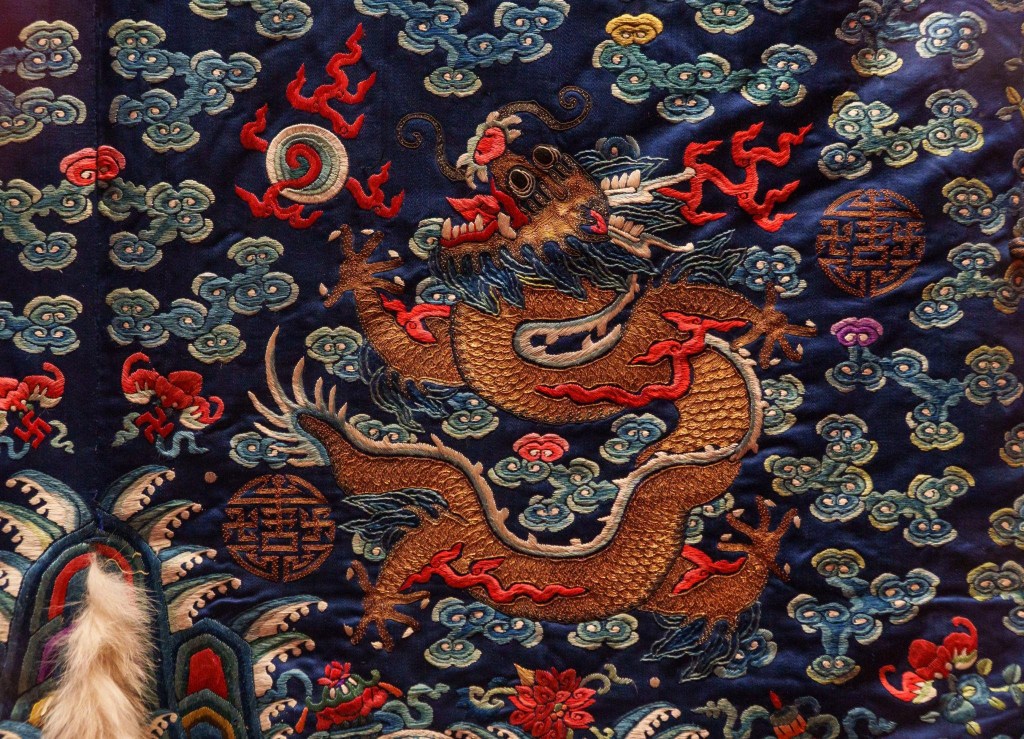
The Qing Dynasty continued and expanded these traditions but also opened new artistic paths.
At the imperial court, art reflected both Chinese heritage and global exchange.
European Jesuit painters like Giuseppe Castiglione brought techniques of realistic shading and perspective, merging them with Chinese brushwork in paintings such as One Hundred Horses.
Meanwhile, porcelain production reached new heights with famille rose enamels, prized for their vivid colors and refinement.
Beyond the palace, individualist painters such as Bada Shanren and Shitao broke conventions entirely, expressing emotion through bold, spontaneous brushstrokes and abstract compositions. Their art speaks of resilience, humor, and independence—a deeply personal dialogue with tradition.
From painted pots and jade carvings to towering bronzes and clay armies, the art of early China reveals a civilization deeply connected to ritual, balance, and belief.
Each dynasty built upon the last—layer by layer—turning craft into culture and symbolism into legacy.
These early centuries laid the foundation for one of the world’s most continuous artistic traditions, where beauty always served something greater: the order of the cosmos and the memory of the ancestors.
Today, artists such as Ai Weiwei and Cai Guo-Qiang bring Chinese art onto the global stage—combining ancient themes with modern media, from porcelain and gunpowder to digital installations.
Their works remind us that Chinese art continues to evolve, balancing tradition, critique, and creativity in a global conversation.
 Armchair Art Share
Leave a comment