
Early Christian art developed between about 200 and 500 AD, during the final centuries of the Roman Empire. Rather than inventing an entirely new artistic style, early Christians adapted the visual language of classical Roman art and gave it new meaning. At first, these works appeared in humble places such as catacombs and burial chambers, but over time they expanded into grand churches filled with mosaics and wall paintings. Themes often included biblical stories, symbolic imagery, and figures such as the Good Shepherd, while Christ was frequently shown as a youthful, beardless figure. Over these centuries, Christian art moved from a quiet, symbolic language used by a small religious community to a public and confident visual tradition that would influence Byzantine and medieval art for centuries.
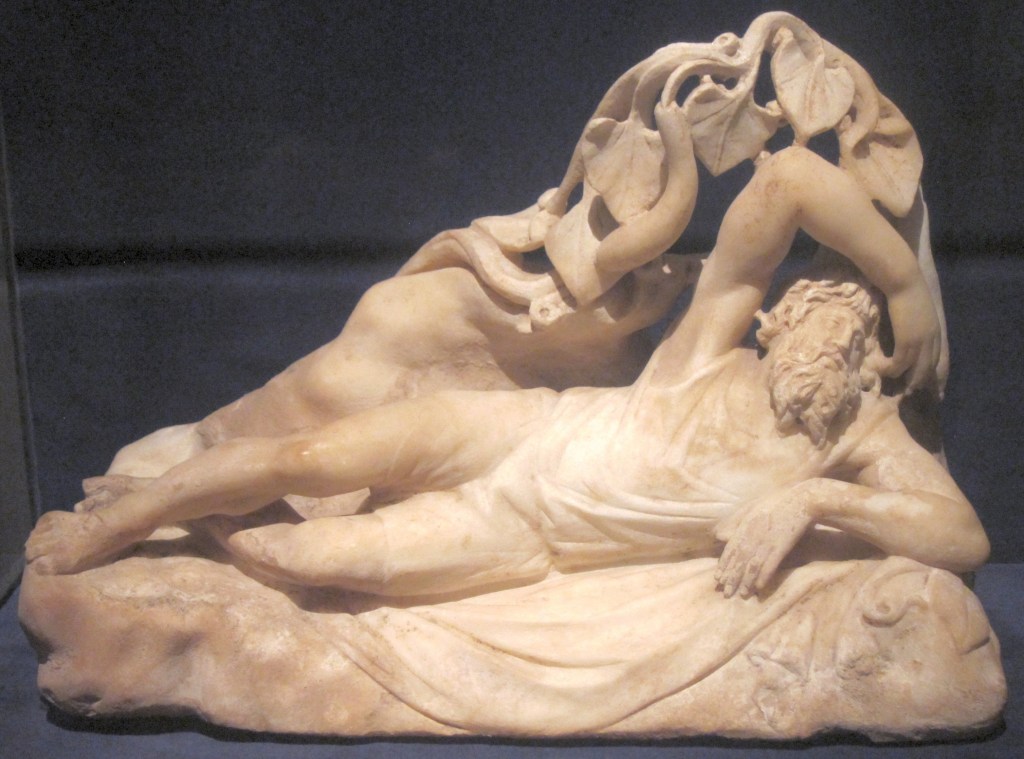
During the early period before 313 AD, Christianity was still a persecuted religion within the Roman Empire. Because of this, Christian artists relied heavily on symbolic imagery rather than direct portrayals of Christ or overtly Christian scenes. Some of the earliest examples of Christian art appear in the Roman catacombs, underground burial sites where Christians decorated walls and ceilings with paintings. Many of these scenes were drawn from the Old Testament and reflected hope, salvation, and divine protection. Common symbols included the Good Shepherd, the fish (ichthys), and the vine, all of which carried deeper spiritual meanings understood by Christian viewers.
Christians also commissioned sarcophagi, or stone coffins, decorated with carved biblical scenes and Christian symbols. These were particularly popular among wealthier believers and reveal how Roman sculptural traditions were adapted to express Christian beliefs. Even in these early works, the art was meant to communicate important religious ideas and remind viewers of the promises of salvation and eternal life. The imagery was both devotional and instructive, helping believers reflect on their faith during a time when Christianity was still emerging as a distinct religious identity.
Everything changed after 313 AD, when the Roman emperor Constantine issued the Edict of Milan, legalizing Christianity. With the religion now accepted openly, Christian art and architecture began to flourish in public spaces. Large churches, often based on the Roman basilica plan, were constructed across the empire. These buildings were richly decorated with mosaics and frescoes, many of which depicted Christ surrounded by apostles and saints. Over time, the artistic style shifted away from the naturalism of Roman portraiture toward a more symbolic, frontal, and spiritual style, emphasizing Christ’s authority and divine presence. Through these developments, early Christian art established a recognizable visual language that would shape the art of the Byzantine and medieval worlds.
 Armchair Art Share
Leave a comment