
Migration & Insular Period Art
c. 400–900 AD
This is one of those “in-between” eras that’s actually packed with creativity. As the Western Roman Empire declined, groups like the Anglo-Saxons, Vikings, and Celtic peoples moved across Europe—bringing their own artistic traditions and blending them with lingering Roman and emerging Christian ideas.
Migration Period
c. 300–800 ce
Between roughly 300 and 800 CE, the movement of Germanic peoples across Europe gave rise to one of history’s most dynamic artistic traditions. Often dismissed as “barbarian art,” the work of these migrating tribes was anything but crude — it was a sophisticated visual language forged in metal, gem, and glass, designed to travel as far as the people who made it.
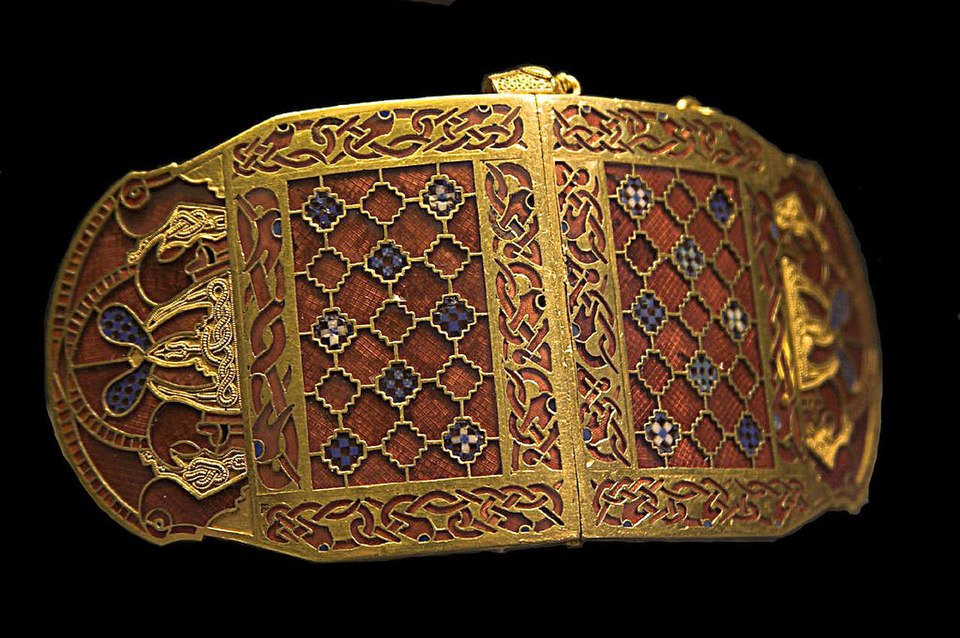
Because life was defined by movement, so too was the art. Rather than monumental sculpture or fixed frescoes, the craftsmen of the Migration Period excelled in the small and the portable: brooches, buckles, sword fittings, and jewelry that could be worn on the body or packed into a saddlebag. Yet small did not mean simple.
Alongside this love of color ran a fascination with form — specifically, with animals. The Animal Style reduced beasts to their most essential and dynamic components: a fang, a claw, a sinuous body coiling back on itself. In the fifth and sixth centuries, Germanic art developed what is now called Style I — a visual vocabulary so abstracted that animal limbs, masks, and bodies were broken apart and reassembled into dense, almost hallucinatory compositions.
The Insular World
c. 600–900 ce · Hiberno-Saxon Art
Beginning around 600 CE, something new emerged on the western edge of the known world. In Ireland and Britain, where Christianity had taken root among Celtic and Anglo-Saxon peoples, a hybrid art form came into being that drew on all of these traditions and transformed them entirely. Insular art — also called Hiberno-Saxon — fused intricate knotwork inherited from La Tène Celtic culture with the animal forms of the Germanic world and figural conventions from Mediterranean manuscripts.
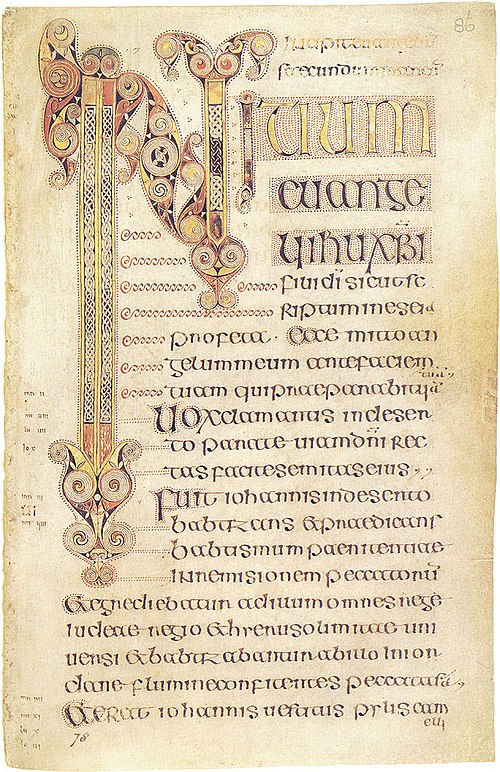
The greatest achievements of Insular art were made not in metal but on the page. In the scriptoria of island monasteries, monks labored over illuminated manuscripts of staggering complexity, covering their pages with interlace patterns so finely drawn that individual strands can be followed for meters without a break.
But the metalworkers had not been surpassed — only matched. The Tara Brooch combines gold filigree, amber, and glass into a circular form that seems to contain the entire decorative vocabulary of the age. The Ardagh Chalice, a silver communion vessel discovered in a field in County Limerick, covers its surface with bands of interlace and enamel so delicate they seem almost to vibrate.
Taken together, the art of the Migration Period and the Insular world it helped generate represents one of the great creative flowerings of European history — born of displacement, refined in isolation, and ultimately preserved in some of the most beautiful objects ever made.
 Armchair Art Share
Leave a comment